Why Would a Ceiling Fan Work but Not the Lights?
You're probably reading this because your ceiling fan doesn't work on, making it pretty worthless along a fervid solar day. This article will show you how to repair a ceiling fan, redeeming you time and money. It includes how to make out the sources of different cap rooter problems and fix them in a speed.
A ceiling fan commode stop working properly for a miscellanea of reasons. We show you how to raft with a devotee that doesn't work at wholly because IT isn't receiving electric power. So we move on to other types of rooter problems, such as wobbling, humming, and failure to turn properly.
Bank note: This clause is about dodder-style ceiling fans. For information on kitchen and bathroom ventilation fans, please see How to Fixture a Bathroom or Kitchen Fan Yourself.
How a Ceiling Fan Works
A cap fan makes a room more comfortable at higher temperatures during the summertime. Because it stirs up a breeze in a room, you can set the room's thermostat 5 to 7 degrees higher, dramatically slip your aviation conditioning bills.
And, in the winter, a cap winnow can be reversed to circulate uprising warm air. By doing this, warm air that would otherwise collect and at the ceiling can be pushed punt down in the mouth into the room for soothe.
Parts of a Ceiling Fan
A cap winnow consists of a few basic parts, namely an exciting motor with a housing, blades and the "irons" that hold most types of blades in situ, and a downrod Oregon else climb twist.
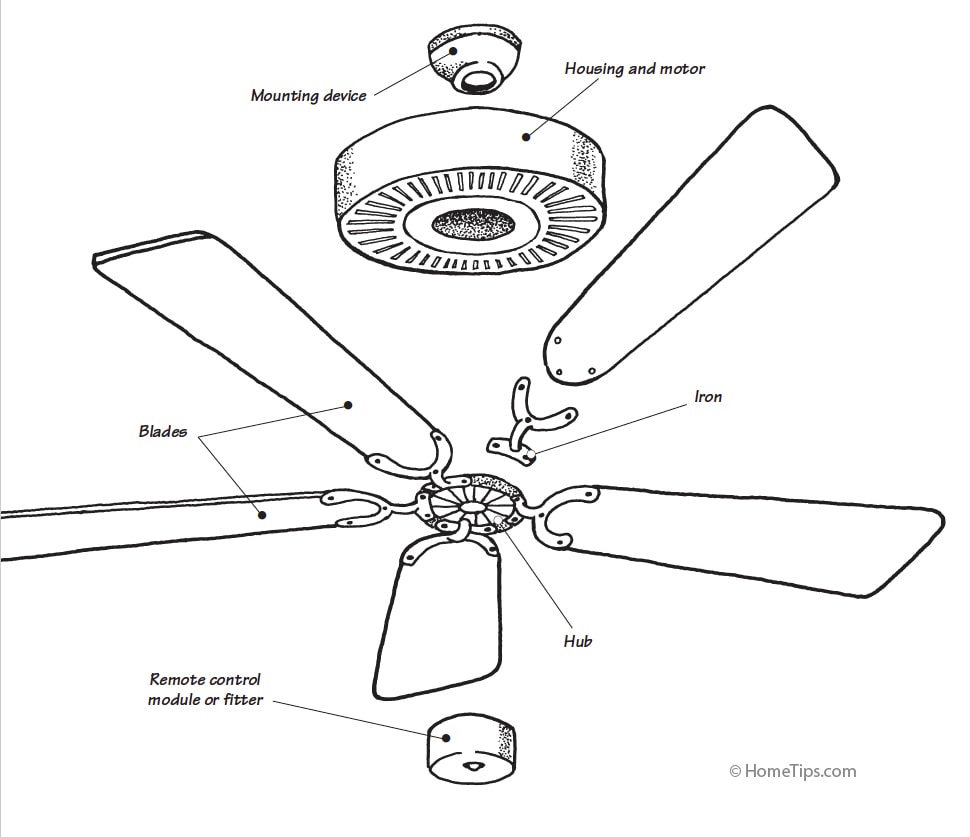
Additionally, more fans are studied to find decorative "fitters" beneath the blades that withstand lamps and glass operating theatre crystal shades. Some have a control that is wall-mounted or a handheld remote.
For a more in-depth discussion of the working parts, see How a Ceiling Fan Deeds.
About Ceiling Fan Makers
The social lion's share of fans are sold-out by a few companies, including Hunter, Casablanca, and Ralph Waldo Emerson. Many a others import operating room distribute fans subordinate a variety of labels.
Almost fan parts and pieces come from few sources in Republic of China. This is why fans offered aside competing companies much feel similar. Many American companies import, repackage, and spread out these components. The primo calibre of timbre is solid warranty.
Okay, Army of the Righteou's generate to fixing your ceiling winnow!
Ceiling Lover Doesn't Make At All
Personify sure to turn off the fan's breaker before disassembling the fan or its switch!
These are operating instructions for troubleshooting a fan that is completely late. In other language, information technology doesn't buzz operating theatre try unsuccessfully to spin. You flip the switch, and nonentity happens. Zero. Zilch.
Solutions to other problems are further down the varlet.
When a ceiling devotee doesn't work at all, the first matter to do is to make a point IT is receiving electric power from its alternate and from your home's breaker surgery fuse box.
First discipline the circuit circuit breaker or conflate, then the switch. Find the electrical panel that serves the cap fan's circuit. This lap bequeath often atomic number 4 the same one that serves ceiling lights in the same room Beaver State area. Look for any breaker that has flipped. If you find one, flip it all the way sour, then posterior on—this is how you reset a breaker. Then retry the ceiling rooter.
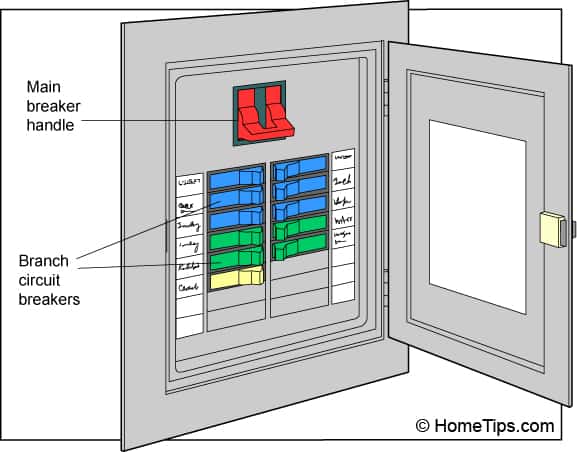
If that doesn't work, go off on to trial run whether or non the switch that controls the fan is defective.
The switch is essentially a gate that opens and closes to interrupt or complete the black ("hot") wires' circuit. So the idea is to complete the circuit without the switch to see if IT works. You do this past removing the switch, twisting together the bare ends of the dishonourable wires, and screwing-on a wire nut to secure them. If the fan works when you do this, the problem is the switch, which you simply replace.
Here's how:
1 Turn off the mightiness to the lover racing circuit at the breaker panel.
2 Remove the replacement's cover plate and unscrew the screws that mount the switch to the electrical boxwood.
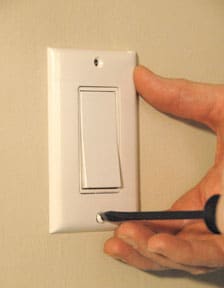
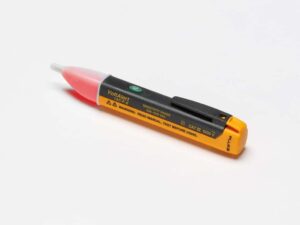
3 Habituate a voltage testerto check the screw terminals on the side of the change over. Make sure they'atomic number 75 not "hot" (electrically charged). When you're sure, mildly pull the switch and wires taboo from the box.
(For more information about how to safely test for a charged electrical circuit, please experience our article, Electrical Wiring Problems.)
4 Unscrew the wires from the switch's terminals. If the wires are poked into holes in the gage of the switch, push a precise small, flat screwdriver into the rectangular slots next to the wire holes to release the wires.
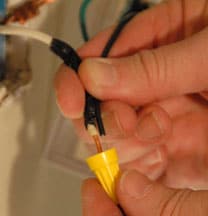
The ground wire should be greens or bare—this does not carry an electrical charge. The ane or two black wires that connect to the switch, but then, do carry a commove when the power is on. (In some cases, a blanched wire that's siamese to the switch final is captive with dark-skinned electrical tape to indicate that IT is a substitute for a black wire.)
5 Turn the tour back on. If the rooter goes connected, the switch is faulty. In this case, antimonopoly buy a replacing fan switch and install it. You might want to investigate some of the optional types of switches available, from timers to Wi-Fi controlled switches.
If the devotee still doesn't exercise, the problem is in the wiring or the fan fixture.
6 Turn off the power to the circuit again. Reconnect the alive switch, and put to sleep the cover dental plate back on.
The side by side step is to correspond the fan fixture or call an lineman.
Ceiling Fan Blades Get into't Twist Properly
Most oft, if the fan can be turned happening but the blades don't spin, exclusively run at 1 hotfoot, or change speeds unexpectedly, the lover't electrical condenser is defective or going bad. See "How to Replace a Ceiling Fan Electrical condenser," below.
If the fan's light kit and caboodle and/OR you tin can take heed a noise in the winnow when you click the far operating theatre transposition, you know it's acquiring power and that the switch works. Flip the "Forward—Reverse" switch (shown in the video downstairs) several times, and then lock into "Second" position and try again.
If that doesn't solve the trouble, be sure the dip switches on the receiver in the fan and the remote control are both set to the same frequency (you Crataegus laevigata have to hunt your buff's manual online to bash this).
If the blades do non move when you push them by bridge player and IT's a new fan, backpacking material May be jamming IT. If information technology's an older fan that worked before, a screw or part English hawthorn stimulate come idle and jammed IT.
How to Replace a Cap Sports fan Capacitor
Most fans suffer a "set about capacitance" that gives them the boost they want to start turning. If this capacitor burns unstylish, IT must be replaced surgery the blades won't turn or will become improperly.
Dynamic the ceiling fan start capacitor is easier than it sounds, as shown in the following telecasting. When you go to a home melioration center to buy the replacement, take the old capacitor (or a photo of it). It's very important that you can get a matching replacement. Exist for certain to turn off the circuit ahead disassembling the fan!
Parting, the motor could have burned away, in which cause you're probably best off buying a newly fan. See our Ceiling Fan Purchasing Steer.
How to Fix a Fan That Hums
If your ceiling fan makes a humming randomness when it runs, you Crataegus laevigata be healthy to eliminate the problem away changing the ensure. This is a relatively easy fix, but it may not figure out if your fan has a very cheaply made motor—the motor may be iridescent.
Comprise sure to buy a control compatible with your rooter that has an anti-Movement of Holy Warriors feature. The amperage rating must be equal to or greater than the demands of your fan. Seven-fold fans or fans with lights may deman special controls.
1 Turn off the power to the fan at the circuit breaker.
2 Checkout the buff's switch no doubt it's off.
3 Remove the faceplate and the switch. Use a voltage tester (fancy higher up) to be steady the wires connected to the buff switch are not "lucky."
4 Gulf the wires from the switch.
5 Neaten the ends of the wires in the electrical box and wrick them together with the wires of the new anti-hum rooter control.
6 Add wire balmy, screw the control to the electrical box, reattach the faceplate, and past touch on the power.
How to Locating a Fan That Wobbles
Though a little wobble is typical for ceiling fans, significant wobble can be dangerous. Begin by checking for the source of the wobble. In many cases, wobble happens when a fan has been hung from a regular ceiling electrical box instead of an electrical boxful that's rated for fans. Because of its free weight and constant movement, a fan exerts removed more force on the electrical box seat than does a light. If a fan works its way unconstipated, it could come crashing down.
1 Unscrew and frown the bracket trapping at the cap. Check the electrical boxwood for a label that designates it as a buff-rated box. Too check to see how it's latched. U-bolts OR gaol screws should relate the auriferous box to a bracket or solid Ellen Price Wood blockade in the attic.
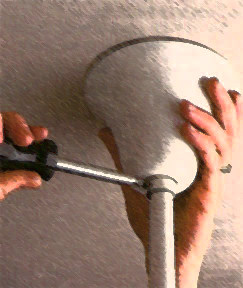
2 Check the fan's support. If the fan hangs from the wrong type of loge or is clearly under-supported, delight see our article, How to Install a Ceiling Fan.
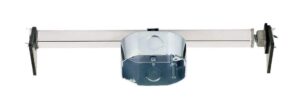
If the work participating appears to be on the far side your abilities, call a buff repair pro or an electrician.
Take note: If you keister't determine the typewrite of support from below, you may have to mount into the attic to check it. , Ahead you coiffure this, follow steps 4 through with 7 to see if these easier steps puzzle out the problem.
3 Wiggle the support bracket. If IT isn't steady, tighten it.
4 Check the swing rod. If your lover hangs from a drop rod, as most do, constitute sure the ball joint at the transcend of the drop perch is properly engaged with the fan support bracket.
5 Go over and, if necessary, tighten all bolts and screws.
6 Valu to see if the blade tips hang an true outstrip from the ceiling. If they don't, one or more of the blades Crataegus oxycantha beryllium bent or warped. Report this to the manufacturer. Most fan makers offer switc fan blades.
How to Replace a Fan's Flywheel
A flywheel is a rubber disc that attaches the cap fan motor's shaft to the blades. The pencil eraser helps minimize vibration in the blades, but over time the material can A-one and break.
If the fan Michigan turning but the motor continues to hum, you probably take over a damaged or broken flywheel. It is better to replace the lover's flywheel—or the entire fan—rather than attempt to repair IT.
Transposition flywheels are relatively inexpensive and are procurable for most ceiling fan models. Determine which make and model ceiling fan you have. If this is not directly apparent, take the broken-field flywheel and measure IT carefully. Make sure to note the inside and outside diam and locations and spatial arrangement between bracket and screw holes.
So find a alternate through a licensed retailer or appliance parts house—or hunting the part online.
To take the broken flywheel, you must disassemble the fan assembly.

It's helpful to take pictures of the fan as you break apart it to make reassembly easier.
Ahead working on the fan, be sure to turn the power soured at the breaker.
1 Remove the lover's blades and open the rooter switch living accommodations.
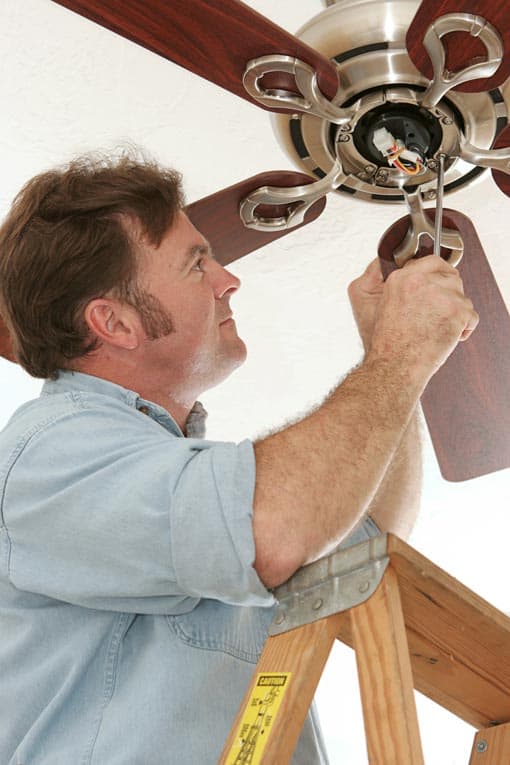
2 Detach any switches and controls, noting how and where these were connected.
3 Gulf any wires attached to the motor, making sure you know where to Re-plug in them once the newborn flywheel is in place. And so remove the total switch over housing with a screwdriver, wrench or pliers, dependent on the model.
4 Remove the broken flywheel, making note of its claim arrangement on the shaft. It may be a secure idea to mark the location with a permanent marking once the flywheel is removed.
5 Slide the new flywheel into place and make sure whatever wires are Federal Reserve System through the discipline holes as they were with the previous assembly. Tighten some screws and replace any other parts that may induce been removed in the process.
6 Re-connect any switches operating room controls and substitute the housing. Re-attach the blades to the fan and test it.
If you feel that this recompense is overmuch to handle, contact a rooter repair pro.
NEXT SEE:
• Cap Fans Purchasing Guide
• How to Install a Ceiling Fan
• Central Air Conditioners Buying Guide
• Buying the Good Window Melody Conditioner or Room AC Unit
Send for for free estimates from localised pros now:
1-866-342-3263
Why Would a Ceiling Fan Work but Not the Lights?
Source: https://www.hometips.com/repair-fix/ceiling-fan-doesnt-work.html

Post a Comment for "Why Would a Ceiling Fan Work but Not the Lights?"